Intentional Movement Matters
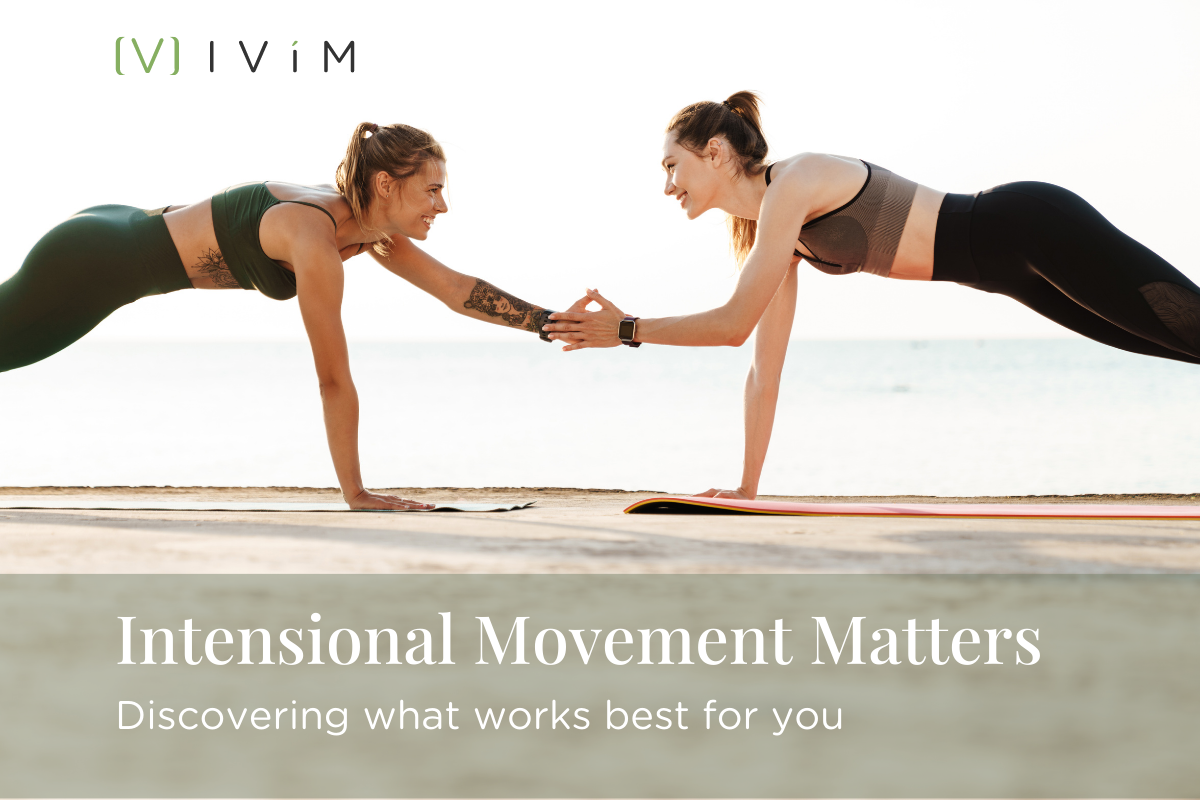
The body is an impeccably designed system that was intended for movement. By and large, we’ve lost sight of that along the way. Oftentimes, we see one extreme or the other. The couch potato or the exercise fanatic. But, what if we changed the way we think about movement? Think less about the altering aesthetics and more about how it makes our mind and body feel. Think about the long-term benefits for longevity, injury prevention, even increasing overall happiness.
We know aerobic exercise is beneficial for cardiovascular health. Studies are now showing that ANY type of movement, even mindfulness practices and slower paced workouts, have tremendous benefits to the body through decreases in blood pressure, stronger stress response signals, lowering inflammation, and even better brain health.
So, how do we become intentional movers? We’re aiming for balance and that starts with awareness. If you’re already on an intense exercise routine, make sure you’re building in time for rest and recovery. If you’ve never had a workout schedule or routine, it can be intimidating to start one. Follow these basic steps to get moving. Remember, it’s progress over perfection!
1. Find your thing – the reality is, if it’s not enjoyable for you, it likely won’t be sustainable. Not everyone has to be a runner or powerlifter. Find what works for you, what you enjoy, and what appeals to you. Maybe it’s biking, swimming, yoga or even tai-chi. It’s not necessarily what you’re doing, it’s simply the fact that you’re incorporating intentional movement, whatever that may be.
2. Start small – this idea that we need to go from couch to competition oftentimes ends in frustration. Starting small allows you the time and space to work towards increasing your activity level without harming yourself. Walking is a great place to start! So are simple exercises like yoga. You can add distance, speed, and intensity over time.
3. Keep it short, keep it sweet – arduous workouts are certainly not the only way to reap the benefits of movement and can often feel burdensome. Research shows you can actually workout less and see even better results, especially if you stay consistent. Again, it’s about finding balance and creating habits.
4. Find a friend, incorporate family – Not only does a teammate typically help with accountability, but it also reinforces a supportive community which is great for both mental and physical health. Find someone to relish in each other’s success.
5. Rest and recover – we often think in our mind that more of anything is better. However, the body requires time to heal and recover. Incorporate recovery time, taking days off in between more strenuous workouts and opting for a more mindful activity like breathwork, meditation, and yoga.

